Resources
Email Promotion Ideas for Activewear Brands
Author :
MailMend Team
Key Takeaways
Email remains the highest-ROI channel for activewear brands — generating $42 per dollar spent while driving 24% of e-commerce orders, outperforming every other digital marketing channel
Strategic send timing separates top performers from average brands — leading activewear companies send emails in the evening, with median send times between 3:30 PM and 6:30 PM when consumers are most receptive after work
Frequency optimization balances engagement with deliverability — successful brands send 2-5 emails weekly during normal periods, scaling up during peak sales events while maintaining sender reputation
Behavioral segmentation powers personalization that converts — Nike's approach of analyzing purchase history, browsing behavior, and workout preferences delivers targeted campaigns that generic demographic segmentation cannot match
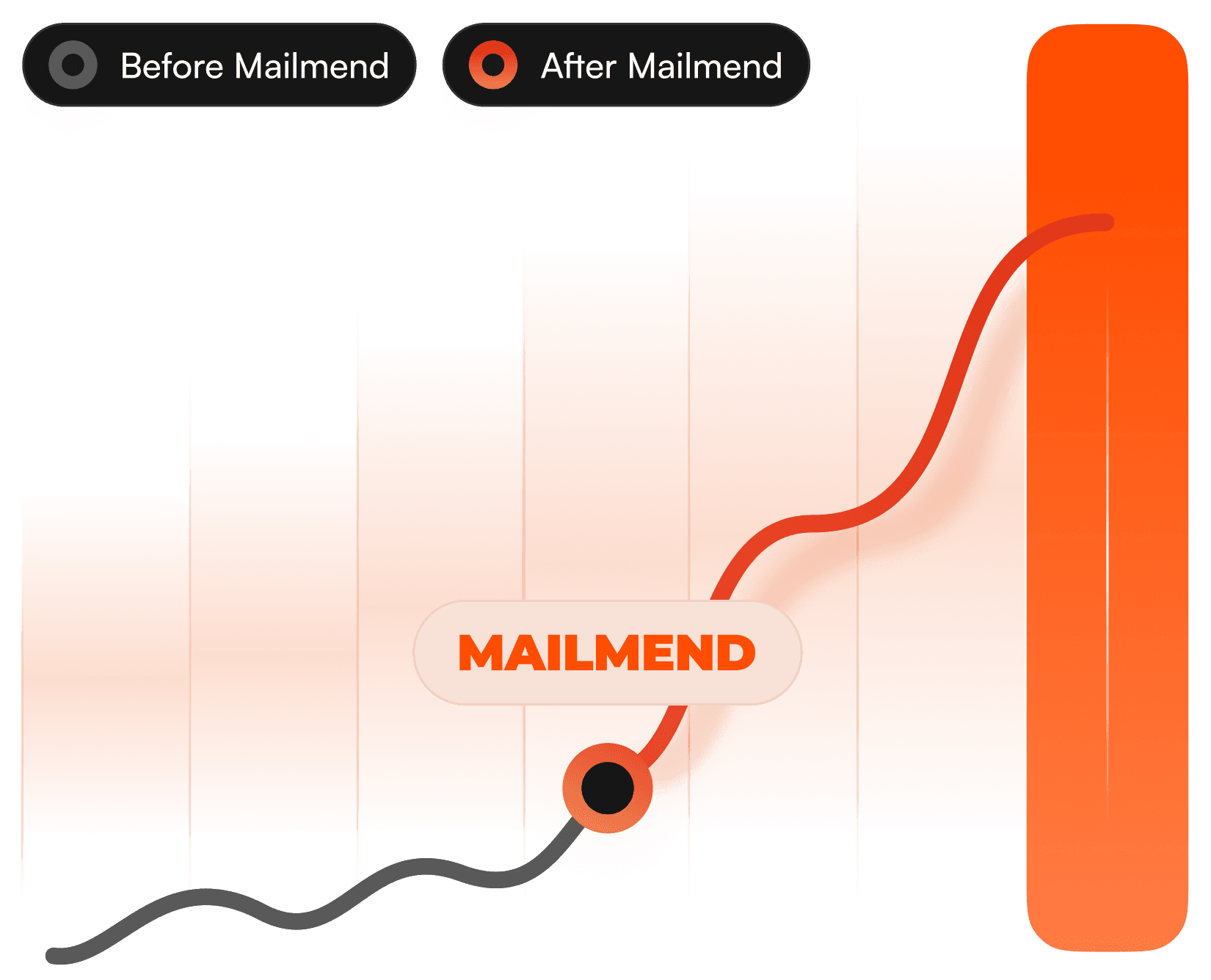
Inbox placement determines whether your campaigns generate revenue or disappear — the difference between landing in Gmail's Primary inbox versus the Promotions tab can mean 50-100% revenue variation on identical email content
Here's the uncomfortable truth most activewear brands ignore: your email marketing strategy might be technically sound while missing the inbox entirely. The $771.8 billion activewear market projected by 2032 rewards brands that reach customers—not those whose campaigns get buried in promotional folders.
Email marketing for activewear brands requires more than compelling content and proper segmentation. When Nike generates 27.5% of revenue from its $51.542 billion through digital channels, the lesson isn't just about email strategy—it's about ensuring those emails reach the Primary inbox where customers actually see them. This is where Mailmend changes the equation, moving campaigns from Gmail's Promotions tab to the Primary inbox without requiring changes to your content, copy, or technical infrastructure.
Crafting Engaging Email Content for Activewear Audiences
Activewear customers respond to content that connects with their lifestyle, not generic promotional messaging. The most effective emails combine product promotion with genuine value—workout tips, style guides, and community content that customers want to open regardless of purchase intent.
Content types that resonate with activewear audiences:
Behind-the-scenes content — manufacturing processes, athlete partnerships, and design decisions that reinforce brand authenticity
Customer testimonials and UGC — real customers wearing products during actual workouts builds credibility that studio photography cannot replicate
Workout tips and training content — positioning your brand as a fitness resource, not just a retailer
Seasonal lookbooks — curated collections for running, yoga, CrossFit, or gym sessions that simplify purchase decisions
Sizing guides and fabric technology explanations — addressing common objections before customers need to ask
Lululemon's email strategy demonstrates this approach with product launches using three-email sequences: a teaser two weeks before launch, a launch day announcement, and a next-day reminder with style guide content. This pattern generates anticipation while providing genuine value at each touchpoint.
Subject line strategy matters for both engagement and deliverability:
Analysis of 200+ campaigns from top activewear brands revealed that none used "Buy" in CTAs—a deliberate strategy to avoid spam filters. Instead, brands use action-oriented alternatives like "Shop Now," "Explore," and "Get Yours." Nike incorporates emojis strategically in subject lines, while Puma drives urgency with language like "Quit Scrolling, Start Saving."
Leveraging Segmentation and Personalization for Activewear Email Campaigns
Generic email blasts waste your most valuable marketing asset. Nike uses behavioral segmentation to analyze customers' past purchases, browsing history, and preferences—understanding individual preferences around favorite sports, shoe styles, and workout types to send targeted product recommendations.
Segmentation approaches that drive activewear conversions:
Purchase history — customers who bought running shoes receive content about performance apparel and accessories
Browsing behavior — visitors who viewed yoga collections but didn't purchase get targeted follow-up sequences
Geographic location — climate-appropriate recommendations based on regional weather patterns
Fitness interests — separate content streams for runners, CrossFit athletes, yoga practitioners, and gym-goers
Loyalty program tiers — VIP customers receive early access and exclusive offers
Gender-specific collections — tailored product recommendations based on shopping patterns
This extends to usage-based segmentation distinguishing avid runners who train daily from occasional weekend athletes. The messaging, product recommendations, and offer timing should differ substantially between these segments.
For abandoned cart recovery, sportswear brand Montirex varies messaging according to cart value—shoppers only receive discounts if they abandon high-value carts, preserving margins on lower-value purchases while still recovering potentially lost sales.
Optimizing Welcome Series for New Activewear Customers
Welcome emails achieve 82% open rates—far exceeding standard campaign performance. This window of maximum engagement demands a strategic approach that builds brand affinity while driving initial purchases.
Essential elements of an activewear welcome series:
Email 1: Brand story and values — introduce your mission, manufacturing philosophy, and what differentiates your products
Email 2: Product category exploration — guide new subscribers through collections based on their stated interests or signup source
Email 3: Sizing and fit guidance — address the primary barrier to online activewear purchases with detailed size charts and fit recommendations
Email 4: First purchase incentive — deliver the promised welcome discount with urgency-driven expiration
Email 5: Community introduction — invite subscribers to follow social channels, join loyalty programs, or participate in challenges
The welcome series should capture preference data for future segmentation. Ask about preferred workout types, fitness goals, and product interests. This zero-party data powers the behavioral segmentation that drives long-term engagement.
Driving Sales with Strategic Discount and Promotion Emails
Promotional campaigns remain the revenue engine for activewear email marketing, but execution separates brands that build long-term value from those that train customers to wait for discounts.
Promotional strategies that protect brand value:
Flash sales with genuine scarcity — limited-time offers on specific products rather than site-wide discounts
Bundle offers — "Complete Your Workout" packages combining tops, bottoms, and accessories at value pricing
Exclusive subscriber discounts — rewards for email engagement that non-subscribers cannot access
Free shipping thresholds — encourage larger orders without discounting products
Loyalty rewards — points-based systems that reward repeat purchases without constant discount messaging
Referral programs — turn satisfied customers into acquisition channels
Enhancing Activewear Email Deliverability and Inbox Placement
The best email content in the world generates zero revenue if it lands in the Promotions tab. Gmail's algorithms evaluate multiple factors—sender reputation, engagement metrics, email authentication, and content signals—to determine inbox placement.
Technical foundations for deliverability:
Email authentication (SPF, DKIM, DMARC) — verify sender identity and protect against spoofing
List hygiene — regularly remove invalid addresses and non-engaging subscribers
Sender reputation monitoring — track inbox placement rates across major email providers
Engagement-based sending — prioritize active subscribers to maintain positive sender signals
Top brands can maintain ideal deliverability rates through strategic IP warming, spam trigger avoidance, and dedicated IPs. They safely scale from 30M to 50M weekly sends while maintaining inbox placement—proving that volume and deliverability aren't mutually exclusive.
For activewear brands experiencing declining open rates or revenue despite strong list growth, the problem often isn't content—it's placement. When campaigns consistently land in Promotions rather than Primary, engagement metrics suffer regardless of content quality.
This is precisely where Mailmend's case studies demonstrate measurable impact:
Dr. Squatch achieved 112% email revenue increase with 42% open rate improvement and 67% CTR increase within 24 hours of implementation
Ministry of Supply saw 27% open rate increase and 30% CTR increase within one business day
StickerYou experienced 64% open rate increase and 43% CTR increase, with day 1 boost of 20% reaching 100% increase by month 1
The technology moves emails to the Primary inbox without requiring content changes, copy modifications, or complex technical configurations.
Automating Activewear Email Flows Beyond the Basics
Automation transforms email from a manual campaign channel into a revenue-generating system that works continuously. Abandoned cart flows generate $3.65 average revenue per recipient—the highest RPR of any automation—making them essential for activewear brands.
High-impact automation flows for activewear:
Abandoned cart sequences — three-email series with increasing urgency and potential incentives
Browse abandonment — follow-up on viewed products before cart addition
Post-purchase follow-ups — sizing confirmation, care instructions, and complementary product recommendations
Win-back campaigns — re-engage lapsed customers with personalized offers based on purchase history
Back-in-stock alerts — notify interested customers when popular items return
Price drop notifications — alert wishlist holders when items go on sale
Birthday and anniversary flows — personalized celebrations with exclusive offers
The key to automation success is personalization at scale. Generic "You left something behind" messaging underperforms compared to specific product reminders with relevant styling suggestions and social proof from customer reviews.
Measuring Success: Analytics for Activewear Email Marketing
Vanity metrics mislead activewear brands into false confidence. High open rates mean nothing if those opens don't convert. The metrics that matter connect email performance directly to revenue outcomes.
Key metrics activewear brands should track:
Open rate — baseline engagement indicator, though affected by Apple Mail Privacy Protection
Click-through rate (CTR) — measures content relevance and offer appeal
Conversion rate — the ultimate measure of email effectiveness
Revenue per email — attributes actual sales to specific campaigns
Subscriber growth vs. churn — net list health over time
Revenue per recipient (RPR) by flow — identifies which automations generate most value
A/B testing within Klaviyo allows activewear brands to measure exact performance differences between campaign variations. Test subject lines, send times, content formats, and offer structures systematically rather than guessing what works.
Mailmend enables brands to conduct A/B testing specifically for inbox placement—measuring the exact revenue lift from Primary inbox placement versus Promotional tab placement. This data quantifies the deliverability impact on revenue, moving inbox optimization from theory to measurable business case.
Building Community and Brand Loyalty Through Email
Activewear customers don't just buy products—they buy into lifestyles. Email programs that build community generate lifetime value that transactional campaigns cannot match.
Community-building email strategies:
Exclusive early access — VIP subscribers see new collections before public launch
Fitness challenges — branded challenges with email-delivered daily content and community leaderboards
Brand ambassador spotlights — feature real customers and athletes in email content
Sustainability initiatives — communicate environmental commitments and progress
Customer surveys and feedback requests — involve subscribers in product development
Event invitations — local fitness events, online classes, or virtual community gatherings
Happy Way's BFCM strategy demonstrates community-building in action—giving loyal shoppers exclusive 24-hour early access to sales before public launch, driving 27% year-over-year growth in attributed revenue by rewarding loyalty with genuine exclusivity.
Seasonal and Event-Based Email Campaigns for Activewear Brands
Activewear email volume should follow demand patterns during peak shopping events like Black Friday/Cyber Monday, then scale back during quieter periods. This frequency keeps brands relevant during peak shopping windows while preserving sender reputation year-round.
Key seasonal opportunities for activewear:
New Year fitness resolutions — January campaigns targeting fresh motivation and new workout routines
Summer workout gear — warm-weather collections with breathability and performance features
Back-to-school activewear — athletic apparel for student athletes and college fitness
Black Friday/Cyber Monday — the highest-volume, highest-stakes email period of the year
New product launches — teaser sequences building anticipation before availability
Seasonal content should publish 4-6 weeks before search volume peaks, allowing campaigns to build momentum before competitors flood inboxes. Create permanent landing pages for annual events rather than temporary URLs that disappear—this builds SEO value while supporting email campaigns.
For BFCM specifically, inbox placement becomes critical:
Larsson & Jennings experienced 82% open rate increase and 51% CTR increase after implementing Mailmend—the solution "saving their Black Friday" after data failures caused deliverability problems
Amberjack saw 54% open rate increase and 51% CTR increase after noticing click rates dive
Clevr Blends achieved 21% open rate increase and 63% CTR increase looking for easy ways to boost email revenue.
When email revenue concentrates in narrow windows, Primary inbox placement determines whether campaigns succeed or disappear.
Activewear brands preparing for peak seasons should contact Mailmend well before major campaigns to ensure inbox placement is optimized when it matters most.
Frequently Asked Questions
How often should activewear brands send promotional emails without damaging subscriber relationships?
The optimal frequency depends on your audience engagement patterns and content value. Most successful activewear brands send 2-5 emails per week during normal periods—enough to maintain top-of-mind awareness without overwhelming subscribers. However, this baseline should flex based on subscriber behavior. Highly engaged segments can tolerate higher frequency, while less active subscribers may need reduced cadence to prevent unsubscribes. Monitor unsubscribe rates, spam complaints, and engagement trends to find your brand's optimal frequency. During peak sales periods like BFCM, temporary frequency increases are expected and tolerated when content provides genuine value.
What role does mobile optimization play in activewear email marketing success?
Mobile optimization is non-negotiable for activewear email marketing. Fitness-focused consumers frequently check email during gym visits, between workouts, or while commuting—predominantly on mobile devices. Emails must render correctly on small screens with touch-friendly buttons, readable text without zooming, and images that load quickly on cellular connections. Single-column layouts, large CTAs, and concise copy perform best on mobile. Test every campaign on multiple devices before sending, and consider mobile-first design where desktop becomes the secondary consideration rather than the primary template.
What compliance considerations should activewear brands address in email marketing?
Email marketing compliance spans multiple regulatory frameworks depending on your customer base geography. CAN-SPAM (US) requires accurate sender identification, clear unsubscribe mechanisms, and physical mailing addresses. GDPR (EU) mandates explicit opt-in consent before sending commercial emails. CCPA (California) requires disclosure of data collection practices and opt-out options. Beyond legal compliance, ISP guidelines around authentication (SPF, DKIM, DMARC), list hygiene, and engagement-based sending affect deliverability. Maintain preference centers allowing subscribers to control email frequency and content types. Document consent sources for every subscriber, and honor unsubscribe requests within legally mandated timeframes.
How do multi-channel strategies affect email marketing effectiveness for activewear brands?
Email should serve as the foundational channel anchoring broader multi-channel strategies rather than operating in isolation. Successful brands integrate email with SMS, social media, and push notifications for cohesive customer experiences. During BFCM, coordinated multi-touch campaigns across channels drive higher conversion than single-channel approaches. However, channel proliferation increases complexity—customers expect consistent messaging across touchpoints without redundant communications. Use customer data to determine optimal channel mix by segment, reserving SMS for urgent time-sensitive offers while email handles longer-form content and community building. The goal is complementary channel orchestration, not channel competition for the same message.