Resources
Email Promotion Ideas for Meal Kit Brands
Author :
MailMend Team
Key Takeaways
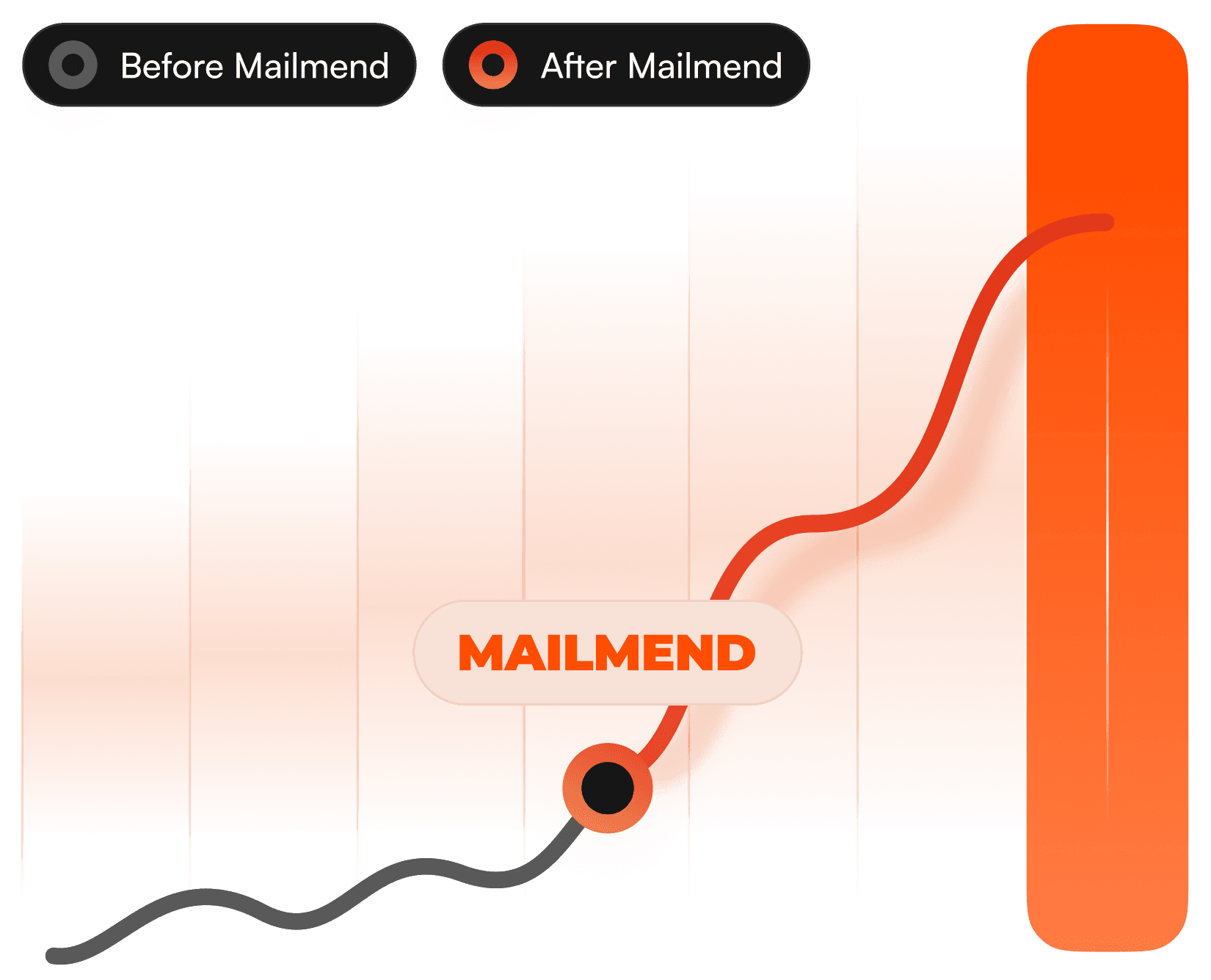
Email marketing delivers the highest ROI for brands — with returns of $36 for every $1 spent, email outperforms every other marketing channel when emails actually reach the Primary inbox. This is where Mailmend changes the equation for e-commerce brands, moving promotional emails from Promotions to Primary without requiring content changes.
Five automated sequences form the foundation of meal kit email success — welcome series, abandoned cart recovery, weekly menu announcements, subscription renewals, and reactivation campaigns work together to combat the industry's 70%+ annual churn rate
Personalization and segmentation multiply email performance — brands using behavioral segmentation see 6x higher transaction rates and click rate increases of up to 139%
Gmail's Promotions tab quietly kills email revenue — even perfectly crafted campaigns fail when they land in Promotions instead of Primary, where engagement rates drop dramatically regardless of content quality
Inbox placement determines whether email strategy works or wastes resources — meal kit brands need customers engaged for 3-6 months minimum to achieve profitability, making every email touchpoint critical
Here's what most meal kit brands get wrong about email marketing: they obsess over subject lines and design while ignoring where their emails actually land. Your beautifully crafted menu announcement doesn't matter if Gmail sorts it into the Promotions tab, where engagement rates are typically lower than the Primary inbox.
The meal kit industry faces a brutal reality — acquiring customers costs $100 or more, yet most subscribers churn within months. Email represents your highest-ROI retention tool, but only when messages reach the Primary inbox.
Crafting Engaging Email Marketing Campaigns for Your Meal Kit Service
Effective meal kit email campaigns start with understanding that 60% of consumers prefer email for brand communication over any other channel. This preference creates opportunity — but only for brands that deliver relevant content to visible inbox locations.
Core elements of high-performing meal kit emails:
Appetizing hero imagery — professional food photography showing finished dishes drives engagement better than ingredient shots or packaging
Clear value proposition — specific benefits (time saved, meals planned, ingredients sourced) rather than generic "healthy eating" claims
Single focused call-to-action — one primary goal per email prevents decision paralysis
Mobile-first design — 41% of email views occur on mobile devices
Personalizing Your Meal Kit Offers
Personalized campaigns are 26% more likely to be opened than generic broadcasts. For meal kit brands, personalization extends beyond using subscriber names — it means segmenting by dietary preferences, past order history, and engagement patterns.
Dynamic content blocks that show vegetarian options to vegetarian subscribers and family-sized meals to family accounts create relevance that generic "this week's menu" emails cannot match. Brands implementing behavioral segmentation based on engagement over 30, 60, 90, and 180-day windows achieve substantially higher retention rates.
A/B Test Your Way to Better Engagement
Split testing within your email platform reveals what actually works for your specific audience. Test subject lines, send times, imagery, and offer structures — but recognize that even winning variants underperform when emails land in Promotions. Mailmend's performance data shows brands achieving significant increases specifically from inbox placement optimization:
Dr Squatch increased email revenue by 112% escaping the promotions tab. In just 24 hours, Dr. Squatch ran a test to see how Mailmend was performing. Little did they know they were missing out on half the revenue they deserved. (42% increase in open rates and 67% increase in CTR)
StickerYou saw a "Day 1 boost of 20% - 100% increase by month 1." StickerYou was absolutely blown away by the results of Mailmend. After going through our videos and speaking to our team, they signed up. (64% increase in open rates and 43% increase in CTR)
Ministry of Supply achieved "Results within a business day!" Although skeptical at first, Ministry Of Supply was able to quickly get setup with Mailmend in a matter of business days and land in the inbox! (27% increase in open rates and 30% increase in CTR)
Larsson & Jenning reported Mailmend "Saved our black friday." Anna was suffering from low open rates & click rates after they had a data failure in their ESP. They also had massive promotions tab issues. We came in a fixed ALL of it. (82% increase in open rates and 51% increase in CTR)
Amberjack found "It Actually Worked." Blake was looking for more incremental revenue after they noticed click rates take a dive. They ran some tests with Mailmend and instantly saw revenue shoot up. (54% increase in open rates and 51% increase in CTR)
Clevr Blends saw it "Made a big Difference." Clevr Blends was looking for an easy way to boost their email revenue after seeing low opens and clicks - so they came to Mailmend and saw amazing results. (21% increase in open rates and 63% increase in CTR)
Boost Your Meal Kit Subscriptions: Email Strategies for New Customer Acquisition
Welcome email sequences generate 320% more revenue than standard promotional emails and achieve open rates of 50-60%. This makes your welcome series the highest-impact email sequence for converting trial customers into long-term subscribers.
Building an effective welcome sequence:
Email 1 (Immediate): Subscription confirmation with account setup guidance and first delivery expectations
Email 2 (Day 2-3): Product education — meal prep tips, storage instructions, recipe customization options
Email 3 (Day 5-7): Brand story and subscription benefits reminder, addressing common early concerns
Turning Browsers into Buyers: Abandoned Cart Strategies
Abandoned cart sequences recover 15-20% of lost sales when properly executed. The biggest meal kit brands run aggressive cart abandonment campaigns — some continuing sequences for over a year with emails every 3-4 days.
Effective abandoned cart timing:
First email: Within 2 hours of abandonment — remind of existing offer
Second email: Next day — address common objections (flexibility, commitment concerns)
Ongoing sequence: Every 3-4 days — introduce new incentives or highlight menu changes
Leveraging Referrals Through Email
Referral programs work exceptionally well for meal kit brands because subscribers share meals with friends and family who witness the product firsthand. Email-based referral campaigns should trigger after positive engagement moments — completed deliveries, recipe ratings, or milestone orders — when subscribers are most likely to recommend.
From First Bite to Lasting Loyalty: Email-Driven Customer Retention
The 70%+ annual churn rate in meal kit subscriptions makes retention email the difference between profitable growth and expensive customer cycling. Since brands need subscribers active for 3-6 months minimum before acquisition costs are recovered, every retention touchpoint matters.
Essential retention email sequences:
Weekly menu announcements — sent 3-5 days before ordering deadline to drive ordering decisions
Subscription renewal reminders — reduce passive churn by keeping subscribers engaged with upcoming deliveries
Milestone recognition — celebrate 5th order, 10th order, subscription anniversaries with rewards or exclusive content
Feedback requests — post-delivery surveys that demonstrate customer care while gathering product insights
Winning Back Lapsed Customers
Reactivation campaigns targeting paused or cancelled subscribers represent significant revenue recovery opportunity. Structured win-back sequences reaching out at 30, 60, and 90 days post-cancellation can recover 10-15% of lapsed subscribers.
The most effective reactivation emails address specific cancellation reasons — if a customer cited menu variety, highlight new recipes; if pricing was the concern, offer limited promotions. Avoid excessive discounting that trains customers to cancel and wait for offers.
Optimizing Deliverability: Ensure Your Meal Kit Emails Land in the Primary Inbox
Even with perfect content strategy, emails landing in Gmail's Promotions tab receive dramatically lower engagement than Primary inbox placement. While Promotions is technically "the inbox," the practical difference in visibility means promotional tab placement functions similarly to near-invisibility for many subscribers.
Factors that trigger Promotions tab categorization:
Repeated templates and content patterns
High HTML-to-text ratios
Multiple promotional links and CTAs
Sender reputation signals
Subject line promotional language
Beyond Content: Technical Factors Affecting Deliverability
Proper email authentication forms the foundation of deliverability. Klaviyo users specifically need branded sending domains to avoid the "sent via klaviyomail.com" disclaimer that signals promotional content to inbox providers.
Technical deliverability requirements:
SPF, DKIM, and DMARC authentication
Branded sending domains
Dedicated click tracking domains with SSL
Bounce rates below 2%
Spam complaints under 0.1%
Unsubscribe rates below 0.3%
For meal kit brands meeting these technical requirements but still experiencing Promotions tab placement, Mailmend provides algorithmic inbox placement optimization that moves emails to Primary without requiring content modifications — a solution that addresses the gap between technical deliverability and actual inbox visibility.
Leveraging Klaviyo for Superior Meal Kit Email Marketing
Klaviyo dominates as the email service provider for e-commerce brands, offering sophisticated segmentation and automation capabilities that meal kit businesses need. The platform's native A/B testing functionality allows brands to measure exact performance differences between variants.
Building Automated Flows for Meal Kit Subscriptions
Klaviyo flows should mirror the customer lifecycle:
Welcome flow — triggered by subscription signup, delivering the 3-email sequence over 7 days
Abandoned cart flow — triggered by cart activity without completion
Post-purchase flow — triggered by delivery confirmation, requesting feedback and encouraging engagement
Sunset flow — triggered by extended non-engagement, cleaning inactive subscribers to maintain deliverability
Advanced Segmentation for Meal Kit Audiences
Klaviyo's engagement-based segmentation using 30, 60, 90, 120, and 180-day engagement windows allows meal kit brands to tailor message frequency and content intensity based on subscriber activity levels. New subscribers receive more frequent communication; dormant subscribers receive reactivation content before eventual suppression.
Mailmend integrates exclusively with Klaviyo, enabling brands to A/B test emails with and without inbox placement optimization within their existing analytics dashboard — measuring exact lift in open rates, click rates, and revenue attribution.
Campaign Spotlight: Learning from Top Meal Kit Brand Strategies
HelloFresh, Blue Apron, and Home Chef have refined email strategies through years of testing and optimization. Common patterns emerge across successful meal kit email programs.
Shared tactics among market leaders:
Aggressive first-box discounts — 50-60% off first orders promoted heavily in acquisition emails
Flexible subscription messaging — emphasizing skip/pause options to reduce commitment anxiety
Recipe-focused content — featuring popular dishes with professional photography
Seasonal campaigns — holiday menus, summer grilling, back-to-school convenience positioning
HelloFresh maintains high social engagement and brand visibility partially through email-driven content sharing, encouraging subscribers to post meal photos that generate organic reach.
Measuring Your Impact: Key Performance Indicators for Meal Kit Email Promotions
Vanity metrics like open rates provide incomplete pictures, especially post-Apple Mail Privacy Protection. Focus measurement on metrics that connect to business outcomes.
Essential email metrics for meal kit brands:
Revenue per email sent — direct attribution of sales to specific campaigns
Subscriber retention rate — percentage of subscribers remaining active month-over-month
Customer lifetime value by acquisition source — whether email-acquired customers stay longer
Conversion rate by flow — which automated sequences drive highest purchase rates
Churn reduction attribution — impact of retention emails on cancellation rates
Industry benchmarks show food and beverage brands averaging 40.56% open rates and 0.19% unsubscribe rates. However, these benchmarks assume Primary inbox placement — brands stuck in Promotions see significantly lower performance regardless of content quality.
Strategic Email Planning: Seasonal Sales and Product Launches
Meal kit demand follows predictable seasonal patterns. January brings resolution-driven healthy eating interest; summer sees grilling and outdoor entertaining content perform well; fall and winter drive comfort food and holiday hosting campaigns.
Mastering Black Friday and Cyber Monday
BFCM represents peak acquisition opportunity for meal kit brands. Email strategy should include:
Early access announcements — reward existing subscribers with preview deals
Countdown sequences — building urgency as sale dates approach
Cart recovery amplification — more aggressive abandoned cart timing during sale windows
Post-BFCM retention — immediately engaging new subscribers to prevent January churn
Critical campaigns like BFCM cannot afford Promotions tab placement. Brands should ensure inbox placement optimization is active before high-stakes sending periods. For partnership opportunities that help agencies deliver better client results during peak seasons, Mailmend offers integration support and collaboration programs.
Advanced Email Tactics: Personalization and Automation for Meal Kit Brands
Personalization drives 139% higher click rates when properly executed. For meal kit brands, advanced personalization includes:
Dietary preference filtering — showing only relevant recipes to vegetarian, keto, or gluten-free subscribers
Order history recommendations — suggesting recipes similar to past favorites
Behavioral triggers — sending recipe inspiration emails when engagement patterns suggest ordering decision timing
Dynamic pricing displays — showing subscriber-specific pricing based on plan selection
Frequently Asked Questions
How often should meal kit brands send promotional emails without causing subscriber fatigue?
Frequency tolerance varies by subscriber engagement level. Highly engaged subscribers can receive 3-4 emails weekly without significant unsubscribe increases, while less engaged segments should receive weekly or bi-weekly contact maximum. The key is segmenting by engagement and adjusting frequency accordingly — sending the same volume to all subscribers guarantees either under-communicating with engaged customers or overwhelming inactive ones.
What types of content perform best in meal kit email campaigns beyond promotions?
Recipe inspiration content consistently outperforms pure promotional messaging. Educational content including cooking tips, ingredient spotlights, meal prep guides, and kitchen hacks builds relationship value beyond transactions. User-generated content featuring real customer meals creates authenticity and community. Behind-the-scenes content about sourcing, chef partnerships, or sustainability practices differentiates brands in a crowded market.
Can meal kit brands use the same email strategy for one-time gift purchasers versus subscribers?
No — these audiences require fundamentally different approaches. Gift purchasers need conversion-focused sequences encouraging subscription signup after experiencing the product. Subscribers need retention-focused content that maintains engagement and reduces churn. Treating gift recipients like subscribers wastes the acquisition opportunity; treating subscribers like prospects undermines relationship building.
How do meal kit brands handle email compliance across different regions?
Email compliance requirements vary significantly by geography. GDPR (Europe) requires explicit consent and double opt-in; CASL (Canada) has stricter consent requirements than US CAN-SPAM; CCPA (California) provides data deletion rights. Meal kit brands collecting dietary and health-related data face additional privacy considerations. Best practice involves maintaining geographic segmentation, implementing appropriate consent mechanisms per region, and documenting compliance processes.
What's the biggest mistake meal kit brands make with email marketing?
Focusing exclusively on content optimization while ignoring inbox placement. Brands invest heavily in copywriting, design, and segmentation strategy — then watch campaigns underperform because Gmail sorts everything into Promotions. The foundation must be in place before optimization efforts compound: proper authentication, list hygiene, engagement-based segmentation, and inbox placement optimization. Without Primary inbox visibility, even perfect content fails to generate results.