Resources
Email Promotion Ideas for Supplement Brand
Author :
MailMend Team
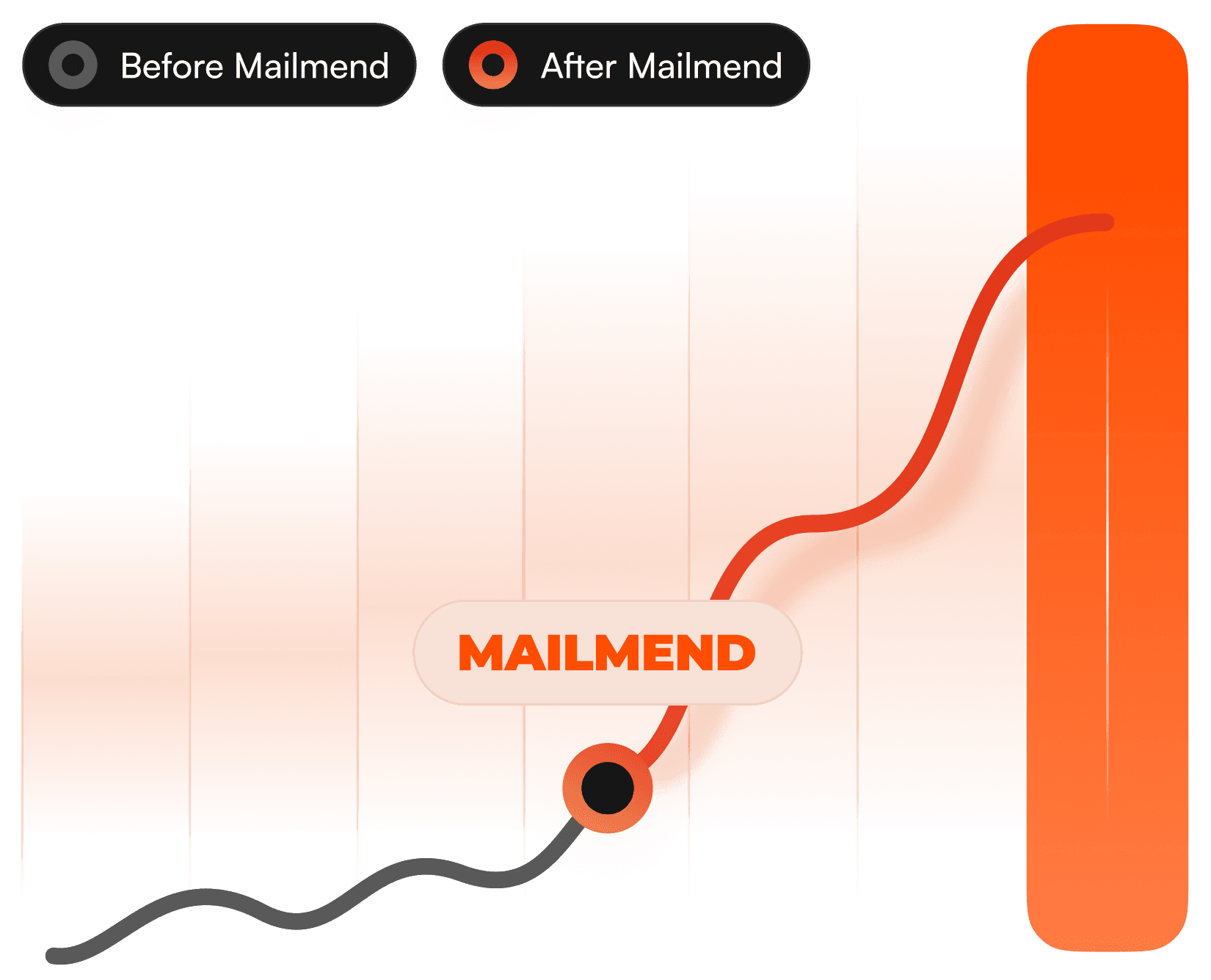
Here's what separates supplement brands generating 7x more revenue per email recipient from the rest: they've stopped treating email as a broadcast channel and started treating it as a relationship-building system. The difference isn't better copywriting or prettier templates — it's understanding that supplement customers require education, trust-building, and personalization before they'll commit to products that affect their health.
Most supplement brands pour effort into crafting the perfect subject line while their emails sit unopened in the Promotions tab. They spend hours on product photography while customers scroll past generic "20% OFF" campaigns. They optimize send times while ignoring the longer consideration cycles health-conscious buyers actually need. Working with a deliverability solution like Mailmend addresses the foundational inbox placement problem that makes everything else possible.
This guide breaks down email promotion strategies that work specifically for supplement brands — from compliance-safe messaging to automated replenishment flows that convert one-time buyers into lifetime customers.
Key Takeaways
Educational content outperforms promotional messaging by wide margins — top supplement email programs maintain a 6:2 ratio of educational to promotional emails monthly, building trust through wellness insights rather than discount fatigue
Replenishment flows drive retention, not just one-time sales — automated emails triggered by product consumption cycles achieve 30-40% higher retention rates than generic sequences, turning first-time buyers into subscribers
Health goal segmentation crushes demographic targeting — segmenting by objectives like sleep improvement, stress management, or immune support generates 3-5x higher engagement than age or gender-based segments alone
Compliance-first copywriting protects revenue — the FTC's Health Products Compliance requires substantiation for all health claims, making identity-based messaging safer and more effective than ingredient-focused claims
Crafting Effective Promotional Emails for Supplement Brands
Supplement email marketing operates under constraints that other e-commerce categories don't face. You can't claim your vitamin C "cures colds" or your magnesium "treats anxiety." The FTC requires substantiation for all health-related claims and mandates disclosure of limitations.
This restriction actually creates opportunity. Brands that master compliant yet compelling copy differentiate in a market where competitors risk enforcement actions.
Subject Lines That Boost Open Rates
Subject lines for supplement emails should address the identity customers want rather than the ingredients they'll consume. "For the parent who refuses to call in sick" outperforms "Contains 5,000mg Vitamin C" because it speaks to outcomes without making prohibited disease claims.
High-performing subject line patterns for supplements:
Identity-focused — "For early risers who refuse to drag" rather than "Energy-boosting B vitamins"
Question-based — "Why does your afternoon energy crash?" addresses real customer concerns
Educational hooks — "The sleep mistake 73% of adults make" promises insight, not product pitch
Curiosity gaps — "What we changed about our formula (and why)" for existing customers
Industry data shows 34.82% focus on discounts, creating fatigue among customers trained to wait for sales. Subject lines that promise education or insight cut through this noise.
Personalization Strategies for Higher Engagement
Generic supplement emails fail because health decisions are deeply personal. Someone managing stress needs different messaging than someone training for a marathon, even if they're both buying magnesium.
Interactive quizzes that capture zero-party data about specific health objectives enable personalized product recommendations and goal-based email sequences. Top performers maintain 3-5 primary segments to balance personalization with operational efficiency:
Sleep and recovery seekers
Energy and focus optimizers
Immune support prioritizers
Athletic performance builders
General wellness maintainers
Each segment receives content that addresses their specific concerns, questions, and purchase triggers rather than generic "supplement tips" that resonate with no one.
Leveraging Email Marketing Tools for Supplement Brands
Email service providers designed for e-commerce handle the technical infrastructure — templates, automation triggers, analytics dashboards. But choosing the right ESP matters less than how you use it. One supplement brand increased email revenue from 8.9% to 33% of total revenue in four months not by switching platforms, but by implementing proper flows and segmentation within Klaviyo.
Choosing the Right ESP for Supplement Businesses
Klaviyo dominates the e-commerce email space for good reason: native Shopify integration, robust automation builders, and analytics that connect email performance to actual revenue. For supplement brands specifically, Klaviyo's ability to trigger flows based on specific product SKUs enables the consumption-cycle automation that drives retention.
Key features supplement brands need from their ESP:
Product-specific triggers — ability to launch flows based on which exact supplement a customer purchased
Predicted next order date — analytics that estimate when customers will run out of product
Revenue attribution — connecting email touchpoints to actual purchases, not just clicks
A/B testing infrastructure — testing subject lines, send times, and content variations systematically
Segment builder flexibility — creating audiences based on behavior, not just demographics
The ESP provides the infrastructure. What happens with that infrastructure — the flows, segments, and content — determines results.
Boosting Deliverability: Ensuring Supplement Emails Reach the Primary Inbox
Here's the uncomfortable truth about email deliverability: perfect SPF, DKIM, and DMARC authentication doesn't guarantee your emails reach the Primary inbox. Gmail's categorization algorithm evaluates content patterns beyond traditional spam filters, and supplement promotional emails frequently land in the Promotions tab despite passing every technical check.
Industry data shows engagement challenges for supplement brands, making inbox placement optimization critical for revenue performance.
Understanding Gmail's Categorization Algorithm
Gmail's algorithm analyzes multiple signals to categorize emails: promotional language patterns, image-to-text ratios, link density, sender behavior, and engagement history. Traditional deliverability fixes address technical authentication but don't control this algorithmic categorization.
The result? Supplement brands with healthy sender reputations, engaged lists, and proper authentication still watch their carefully crafted campaigns disappear into the Promotions tab.
Why Primary Inbox Placement Matters for Supplement Sales
Primary inbox placement puts your email at the top of customers' Gmail — alongside personal correspondence, work emails, and high-priority messages. Promotions tab placement buries your email among dozens of other marketing messages customers may check once per week.
Brands using specialized inbox placement technology report 21-63% increases in click-through rates by moving emails from Promotions to Primary without content changes. For a supplement brand sending to 100,000 subscribers, this difference translates directly to revenue.
The case studies from e-commerce brands demonstrate the scale of this impact: Dr. Squatch achieved 112% email revenue increase with 42% open rate improvement and 67% CTR increase within 24 hours of implementation.
Measuring Email Campaign Success: KPIs for Supplement Brands
Vanity metrics kill supplement email programs. High open rates mean nothing if those opens don't convert. Growing list size means nothing if engagement per subscriber declines. Tracking the right KPIs connects email activity to actual revenue.
Key Metrics for Supplement Email Promotions
Primary revenue metrics:
Revenue per recipient — total email revenue divided by list size, the single best indicator of program health
Revenue per email sent — identifies which campaign types generate actual sales
Customer lifetime value by acquisition source — whether email-acquired customers stay longer and purchase more
Leading indicators:
Open rate by segment — comparing engagement across health goal segments reveals content relevance
Click-through rate — indicating content resonance and offer appeal
Conversion rate by flow type — which automations drive purchases versus just clicks
Health metrics:
Unsubscribe rate — optimal frequency sits around 1.99 emails per week for supplements, with higher rates signaling fatigue
Spam complaint rate — should stay under 0.1% to maintain sender reputation
List growth rate — net new subscribers minus unsubscribes and bounces
Mailmend enables A/B testing within Klaviyo to measure exact performance lift from Primary inbox placement versus Promotions tab placement, providing immediate performance validation within your existing analytics dashboard.
Email Campaign Examples and Best Practices for Dietary Supplements
Supplement email programs need both campaigns (one-time sends to segments) and flows (automated sequences triggered by behavior). The most successful programs achieve balance between these approaches.
Welcome Series for New Supplement Customers
The welcome sequence addresses the trust deficit that makes supplement purchases difficult. New subscribers need education before they need offers.
Effective welcome flow structure:
Email 1 (Immediate) — Thank you, brand story, what to expect from emails
Email 2 (Day 2) — Educational content addressing their primary health concern (based on quiz data or signup source)
Email 3 (Day 4) — Social proof: customer testimonials, research citations, third-party testing results
Email 4 (Day 6) — Product introduction with specific benefit messaging
Email 5 (Day 8) — First offer with clear value proposition
This structure respects the extended consideration cycle health-conscious buyers need while building the trust required for supplement purchases.
Re-engagement Strategies for Inactive Buyers
Supplements are consumable products with predictable usage cycles. A customer who purchased a 30-day supply three weeks ago isn't inactive — they're approaching replenishment timing.
Replenishment flows triggered by product SKU and purchase date can achieve higher retention than generic sequences. The flow should:
Trigger 3-5 days before predicted product exhaustion
Reference the specific product purchased
Offer subscription upsell for convenience
Include related product cross-sells based on first purchase
One supplement brand increased monthly retention from 9.8% to 39.3% by implementing SKU-based replenishment flows with subscription awareness integration.
Strategic Considerations for Supplement Brands: Growth and Deliverability
The global dietary supplement market is expected to reach $109.20 billion in 2026. This growth intensifies competition for inbox attention and customer acquisition.
Preparing for High-Volume Sales Periods
Black Friday/Cyber Monday represents the highest-stakes period for supplement email programs. Inbox competition peaks while customer attention fragments across hundreds of promotional emails.
BFCM preparation checklist:
Clean lists 4-6 weeks before — remove chronically unengaged subscribers to protect sender reputation
Warm sending volume gradually — sudden volume spikes trigger spam filters
Create dedicated landing pages — don't send holiday traffic to generic product pages
Test inbox placement before launch — verify emails reach Primary inbox, not Promotions tab
Brands using Mailmend for inbox placement optimization report results visible on Day 1 — critical when BFCM windows are measured in hours.
Scaling Email Marketing for 7-8 Figure Brands
Seven-to-eight-figure supplement brands face different challenges than growing brands. List sizes in the hundreds of thousands require sophisticated segmentation to maintain relevance. Higher email frequency (1.99 emails per week average) works when content provides value, but fails when every email is promotional.
The optimal 6:2 ratio of educational to promotional content becomes more critical at scale. Educational content addressing health concerns, ingredient science, and wellness tips builds the authority that makes promotional emails effective.
Optimizing for Inbox: The 'Zero Changes' Approach to Deliverability
Traditional deliverability consulting requires comprehensive email strategy overhauls: content modifications, copywriting adjustments, complex technical configurations. This approach takes weeks or months to show results and disrupts marketing operations.
The Mailmend Advantage: No Content Changes Required
Mailmend operates differently. The technology works through proprietary algorithmic inbox placement rather than content modification — meaning it addresses Gmail's categorization signals at the technical level rather than requiring changes to email copy, design, or strategy.
How the process works:
Mailmend sends client emails to rotating test inboxes to determine current placement
Proprietary AI analyzes the "promotional threshold" — combined factors Gmail's algorithms use to categorize emails
Custom code is generated specifically calibrated for each Klaviyo account
The code embeds into Klaviyo email templates via drag-and-drop implementation
The result: emails move from Promotions to Primary inbox without changing a single word of content, a single image, or a single link.
Quick Setup for Immediate Results
Setup completes in under 5 minutes through drag-and-drop integration with Klaviyo. This contrasts sharply with traditional deliverability solutions requiring weeks of content strategy changes, domain warming, or technical infrastructure modifications.
Results appear on Day 1 — not after weeks of gradual improvement. For supplement brands preparing for product launches or peak sales periods, this immediate impact matters.
Partnership Model for Supplement Brands: Guarantees and Support
Mailmend's business model aligns incentives with client success. Rather than fixed-fee services that profit regardless of results, the partnership model means customer success directly correlates with Mailmend's success.
Understanding Performance-Based Deliverability Solutions
What the partnership model includes:
Revenue satisfaction guarantees — performance commitments that reduce client risk
Dedicated 1-to-1 representatives — not support tickets, but assigned contacts who understand your specific account
White-glove onboarding — team manages implementation and ongoing optimization
A/B testing validation — split test emails with and without Mailmend code to measure exact lift
This structure differs from typical SaaS tools where you're one ticket in a queue. The dedicated representative model means someone knows your supplement brand, understands your seasonal patterns, and proactively optimizes for your specific situation.
For agencies managing multiple supplement brand clients, partnership opportunities offer integration support and client deliverability enhancement that improves satisfaction across portfolios.
Real-World Success Stories: Boosting Revenue for Supplement and DTC Brands
Abstract claims about deliverability improvement mean less than documented results from recognizable brands. Mailmend's case studies provide specific metrics from e-commerce companies.
How Top DTC Brands Increased Email Revenue
Dr. Squatch (Personal Care):
42% open rate improvement
67% click-through rate increase
Results within 24 hours of implementation
StickerYou:
Day 1 boost of 20%, 100% increase by month 1
64% open rate increase
43% CTR increase
Ministry of Supply:
Results within a business day
27% open rate increase
30% CTR increase
Clevr Blends (Beverage):
21% open rate increase
63% CTR increase
Amberjack (Footwear):
54% open rate increase
51% CTR increase
Larsson & Jennings (Watch Brand):
82% open rate increase
51% CTR increase
Solution "saved their Black Friday" after data failures caused deliverability problems
Measurable Results from Primary Inbox Placement
These results share a common pattern: immediate impact without operational disruption. Brands didn't overhaul their email strategy, rewrite their copy, or change their sending patterns. They addressed the foundational inbox placement problem, and everything else — opens, clicks, revenue — improved as a result.
For supplement brands specifically, this matters because the category faces heightened deliverability challenges. Health-related content triggers algorithmic scrutiny. Promotional language around ingredients and benefits risks Promotions tab categorization. The combination makes Primary inbox placement both harder to achieve and more valuable when accomplished.
Frequently Asked Questions
How do I know if my supplement emails are landing in the Promotions tab or Primary inbox?
Manual testing provides rough guidance: send test emails to Gmail accounts and check which tab they appear in. However, this method doesn't account for how Gmail personalizes categorization based on individual user behavior. More accurate testing requires sending to panels of test inboxes with clean engagement histories — the method Mailmend uses to determine current placement before generating custom optimization code. For ongoing monitoring, track open rates by email client: if Gmail opens consistently underperform other providers, Promotions tab placement is likely the cause.
What email frequency works best for supplement brands without causing unsubscribe fatigue?
Industry benchmarks show supplement brands average 1.99 emails per week as of Q2 2025 — up from 1.34 in Q1, indicating audiences tolerate more frequent contact when content provides value. The key isn't frequency alone but the balance between educational and promotional content. Brands maintaining 6:2 ratios of educational to promotional can send more frequently without fatigue because each email provides genuine value. Watch unsubscribe rates by segment: if specific health-goal segments show elevated unsubscribes, reduce promotional frequency for those audiences specifically.
Can I make health claims in supplement emails, and what language should I avoid?
The FTC's Health Products Compliance requires substantiation for all health-related claims and prohibits disease claims entirely. Avoid claiming supplements "cure," "treat," "prevent," or "diagnose" any condition. Focus instead on structure/function claims (what the ingredient does in the body) with required DSHEA disclaimers, and identity-based messaging that speaks to customer aspirations rather than specific health outcomes. "For parents who refuse to call in sick" works where "immune system booster that prevents illness" violates regulations.
How long do supplement customers typically take to make purchase decisions, and how should this affect email strategy?
Supplement purchases often involve a longer consideration cycle compared to other e-commerce categories, as consumers take time to research products that affect their health. This extended timeline means aggressive discount-focused campaigns often underperform compared to educational sequences that build trust over time. Structure email programs with extended welcome flows (8-10 emails over 2-3 weeks), ongoing educational content addressing health concerns, and patience-based conversion expectations. The initial purchase may take weeks, but properly nurtured customers become high-LTV subscribers.
What should I do if my email list is large but engagement rates are declining?
List quality matters more than size for both deliverability and revenue. Chronically unengaged subscribers damage sender reputation, which affects inbox placement for your entire list. Implement sunset flows that attempt re-engagement before suppressing inactive subscribers. Create segments based on engagement recency (30 days, 60 days, 90 days) and adjust frequency accordingly. For subscribers who haven't opened in 90+ days, consider suppression rather than continued sending. A smaller, engaged list outperforms a large, unengaged one — and protects the deliverability that makes engagement possible.