Resources
Email Promotion Ideas for Wellness Brands
Author :
MailMend Team
Here's what most wellness brands get wrong about email promotion: they focus exclusively on subject lines, copy, and design while ignoring the foundational issue that determines whether customers ever see those emails. Your perfectly crafted campaign means nothing if it lands in the Promotions tab or spam folder.
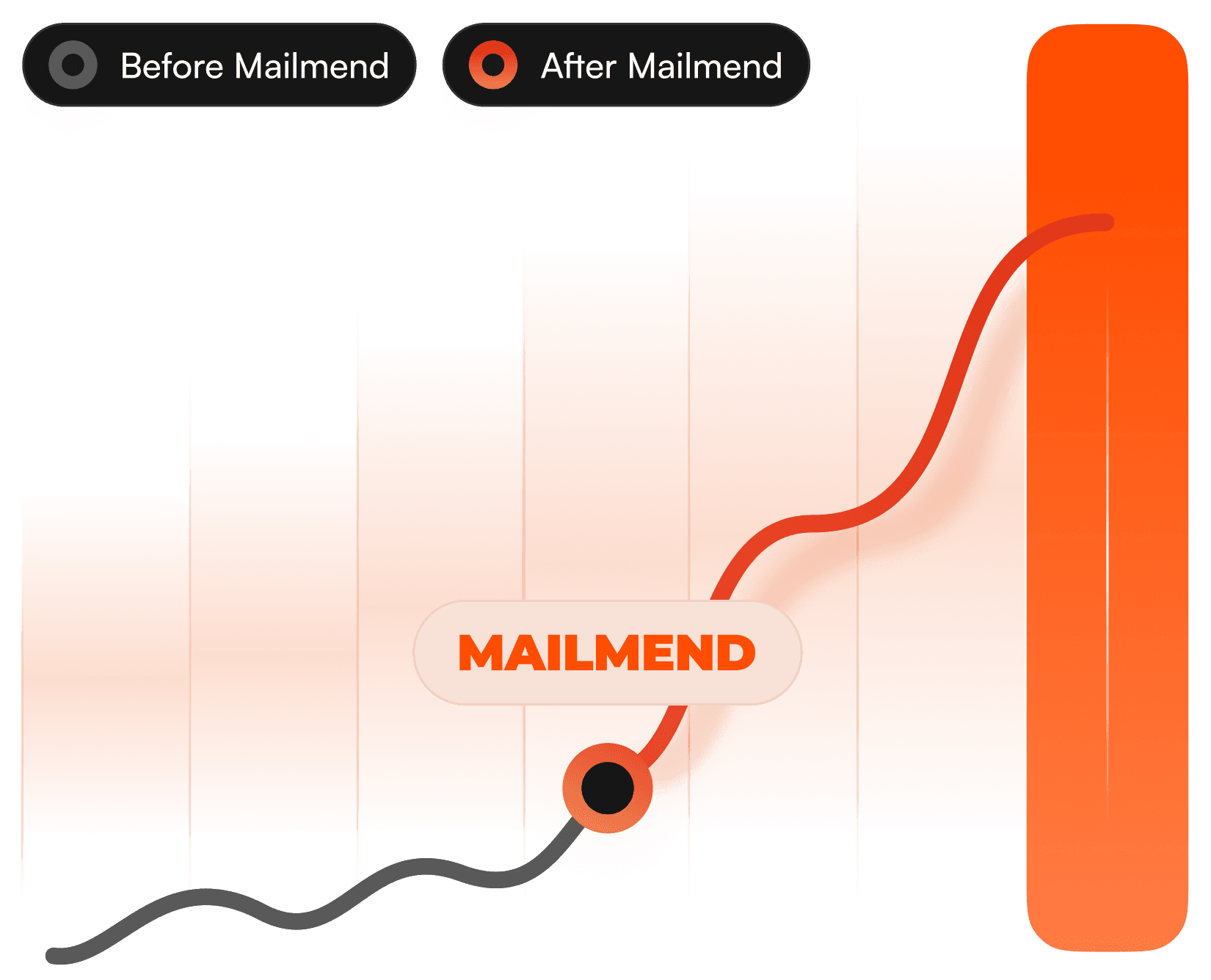
Wellness email marketing drives up to 40% of revenue for optimized brands — substantially higher than general e-commerce averages. Yet many brands watch open rates decline month over month, blaming content or timing when the real culprit is deliverability degradation they don't understand. This is precisely why Mailmend exists: to move your campaigns from the Promotions tab to the Primary inbox without requiring changes to your email content or strategy.
The wellness industry's high repeat-purchase nature and customer loyalty creates exceptional email ROI. Some brands report 4,200% ROI. But capturing that return requires both strategic promotion ideas and the technical foundation to ensure those promotions reach subscribers' primary inboxes.
Key Takeaways
Email marketing drives 20-40% of total revenue for wellness brands — making it the single most valuable owned channel for retention and repeat purchases, significantly outperforming general e-commerce averages
Automation flows generate the majority of email revenue — welcome series, cart abandonment, and replenishment emails achieve 50% open rates
Educational content protects deliverability while building trust — the 80/20 rule (80% educational, 20% promotional) reduces spam complaints and positions wellness brands as authorities rather than pushy sellers
Segmentation is non-negotiable for health-conscious audiences — personalized campaigns based on health goals and purchase behavior show 20-40% better performance than generic sends
Deliverability determines whether your emails generate revenue or disappear — wellness brands face unique spam filter challenges from medical terminology, making inbox placement optimization critical for protecting your email revenue channel
Crafting High-Converting Email Marketing Campaigns for Wellness Brands
Wellness email marketing differs fundamentally from general e-commerce promotion. Health-conscious consumers research extensively before purchasing supplements, treatments, or wellness services. They don't respond to aggressive sales tactics and maintain healthy skepticism about health claims. Your campaigns must balance education with conversion.
Segmenting Your Audience for Maximum Impact
Segmented campaigns dramatically outperform generic blasts across every metric. When you group subscribers by health goals, purchase history, and engagement patterns, you stop sending irrelevant content that drives unsubscribes and spam complaints.
Core wellness segments to build:
Health goal segments — weight management, stress relief, skin health, athletic performance, sleep improvement
Purchase behavior segments — first-time buyers, repeat customers, lapsed subscribers, VIP spenders
Product category segments — supplement users, skincare enthusiasts, fitness equipment buyers
Engagement segments — highly engaged (opens every email), moderately engaged, at-risk (declining engagement)
83% of consumers share their data when it leads to personalized experiences. Use preference centers, quizzes, and post-purchase surveys to collect zero-party data about subscriber health concerns, goals, and product interests.
Personalization Strategies for Health and Wellness
Beyond name insertion, effective wellness personalization connects subscriber health concerns to relevant products and content. When data shows a subscriber purchased magnesium supplements, your next campaign should acknowledge sleep support goals and introduce complementary products like melatonin or relaxation teas.
Personalization elements that drive wellness conversions:
Referencing specific health concerns in subject lines and body copy
Recommending products based on previous purchases and browsing behavior
Adjusting send frequency based on individual engagement patterns
Tailoring content depth to subscriber expertise level (beginner vs. advanced wellness knowledge)
Leveraging Email Marketing Tools for Enhanced Wellness Promotion
The right email platform enables sophisticated segmentation, automation, and analytics. For e-commerce wellness brands, Klaviyo dominates as the preferred ESP due to its deep integration with Shopify, advanced segmentation capabilities, and built-in e-commerce analytics.
Choosing the Right ESP for Wellness Brands
Your email service provider determines what promotional strategies you can execute. Wellness brands need platforms offering:
Purchase behavior triggers — automated emails based on products bought, cart value, and purchase frequency
Predictive analytics — forecasting when customers will run out of supplements for timely replenishment emails
Advanced segmentation — filtering by multiple criteria simultaneously (skin type + purchase history + engagement level)
A/B testing — comparing subject lines, send times, and content variations to optimize performance
Mailmend integrates with Klaviyo, allowing wellness brands to maintain their existing workflows while gaining significant deliverability improvements. You can A/B test emails with and without Mailmend's code to measure exact lift in open rates, clicks, and revenue.
Measuring Campaign Performance with Advanced Tools
Track metrics that connect to revenue, not vanity numbers. Health and beauty retailers achieve 37.8% average open rates on campaigns, with top performers hitting 54.81%. If your rates fall significantly below these benchmarks, deliverability issues likely need attention before promotional strategy adjustments.
Key performance metrics for wellness email:
Revenue per email — total revenue divided by emails sent
Revenue per recipient — revenue from each campaign divided by unique recipients
List growth rate — new subscribers minus unsubscribes over time
Deliverability score — inbox placement rate across major email providers
Essential Email Marketing Templates for Health & Wellness Product Launches
Product launches represent make-or-break moments for wellness brands. Your email sequence must build anticipation, educate subscribers on benefits, and convert interest into purchases — all while maintaining inbox placement through high engagement.
New Product Announcement Templates
Structure launch sequences to maximize both engagement and deliverability. Welcome emails generate revenue 320% more per email than standard promotional sends, demonstrating the power of properly timed, high-relevance messaging.
5-email product launch sequence:
Teaser email (7 days before) — hint at upcoming launch, build curiosity, segment interested subscribers
Educational email (4 days before) — explain the problem your product solves with research-backed content
Launch announcement (launch day) — full product reveal with benefits, ingredients, and early-bird pricing
Social proof email (2 days after) — customer testimonials, before/after results, expert endorsements
Last chance email (5 days after) — urgency messaging if offering launch pricing or bonuses
Building Excitement with Teaser Emails
Teaser emails work particularly well for wellness launches because health-conscious consumers appreciate advance notice to research ingredients and benefits. Ask subscribers to reply with their biggest health concern related to your upcoming product — replies boost deliverability signals while providing valuable market research.
When inbox placement is crucial for major launches like Black Friday or new product releases, Mailmend ensures emails reach subscribers' Primary inboxes. Brands like Larsson & Jennings credited Mailmend with "saving their Black Friday" after deliverability issues threatened their seasonal campaign performance.
Real-World Email Marketing Examples from Leading Wellness Brands
Theory matters less than proven results. These wellness brands demonstrate how strategic email promotion drives measurable revenue growth.
Learning from Top Performing DTC Brands
Dr. Squatch — This personal care brand achieved 112% email revenue increase, 42% open rate improvement, and 67% click-through rate increase within 24 hours of optimizing their inbox placement. Their success demonstrates how deliverability improvements amplify the impact of existing email strategies without requiring content changes.
StickerYou — The brand experienced a day 1 boost of 20% with a 100% increase by month 1 after implementing inbox optimization. They recorded a 64% open rate increase and 43% CTR increase, proving that deliverability directly impacts bottom-line revenue.
Ministry of Supply — This apparel brand saw results within a business day of setup, recording a 27% open rate increase and 30% CTR increase. Although initially skeptical, they quickly confirmed that Primary inbox placement delivers immediate performance improvements.
Larsson & Jennings — After suffering from low open rates and click rates due to an ESP data failure and massive Promotions tab issues, this watch brand achieved an 82% open rate increase and 51% CTR increase, literally saving their Black Friday performance.
Amberjack — Looking for incremental revenue after noticing click rates decline, this footwear brand ran tests and instantly saw revenue improve with a 54% open rate increase and 51% CTR increase.
Clevr Blends — The beverage brand recorded 21% open rate increase and 63% CTR increase by ensuring promotional emails reached the Primary inbox. Founder-led educational content about adaptogens and functional ingredients performed exceptionally well when subscribers actually saw the emails.
Boosting Engagement with Proven Strategies
What these successful brands share: they treat email as a relationship channel, not just a sales channel. Educational content establishes authority. Automation ensures consistent touchpoints. And critically, they prioritize deliverability to ensure their investment in content actually reaches subscribers.
Boosting Open Rates with Effective Promotional Emails
Open rates determine whether your promotional investment generates returns. If subscribers don't open emails, nothing else matters — not your compelling copy, not your beautiful design, not your irresistible offer.
Strategies for Standout Subject Lines
Subject line optimization receives abundant attention, but wellness brands face challenges. Medical terminology like "cure," "treatment," or "medicine" triggers aggressive spam filtering. Health claims that sound promotional — "reverses aging," "lose weight fast" — get flagged regardless of legitimacy.
Subject line principles for wellness:
Lead with benefits, not product features ("Better sleep starts tonight" vs. "New melatonin supplement")
Use specific outcomes rather than vague promises ("Clearer skin in 14 days" vs. "Amazing skincare results")
Test emojis carefully — it's crucial to test all elements, as results can be surprising. For instance, one A/B test for a science-led wellness brand found that subject lines without emojis performed better, suggesting their audience preferred a more professional tone. This highlights the need to test what resonates with your specific audience rather than following universal best practices.
Avoid spam trigger terms while still communicating value
Understanding Gmail's Promotions Tab
Gmail's tab sorting presents a persistent challenge for wellness promotional emails. Marketing messages get categorized into the Promotions tab, where open rates drop significantly compared to Primary inbox placement.
Mailmend's algorithmic inbox placement technology addresses this challenge directly. By analyzing the "promotional threshold" — the combined factors Gmail's algorithms use to categorize emails — Mailmend generates custom code that moves wellness campaigns to the Primary inbox without content modifications.
Improving Sender Trust for Wellness Brands
Sender reputation accumulates over time through consistent engagement signals. Dedicated sending domains with proper authentication (SPF, DKIM, DMARC) form the technical foundation. Beyond setup, ongoing list hygiene — removing inactive subscribers, implementing sunset flows, maintaining clean data — protects reputation for future campaigns.
One health and wellness brand achieved 622% deliverability score increase in 90 days through technical optimization combined with strategic content adjustments. Their 41% open rate on optimized campaigns demonstrates what's possible when deliverability receives proper attention.
Tailoring Email Campaigns for Health Brands: Key Considerations
Wellness email marketing operates under stricter constraints than general e-commerce. Regulatory compliance, audience skepticism, and platform algorithms all demand thoughtful approaches.
Building Subscriber Trust and Loyalty
The 80/20 content rule — 80% educational and valuable content, 20% promotional — reflects how wellness audiences want to be communicated with. They're researching health decisions that affect their bodies and wellbeing. Pushy sales tactics erode trust built over months of relationship-building.
Trust-building content for wellness emails:
Ingredient education explaining why specific compounds matter
Research summaries making scientific findings accessible
Expert Q&As with formulators, practitioners, or brand founders
Customer success stories with authentic, detailed outcomes
Seasonal wellness guides addressing timely health concerns
Educating Your Audience on Health Benefits
Educational emails serve dual purposes: they build authority while generating engagement signals that improve deliverability. When subscribers consistently open, click, and engage with educational content, email providers recognize your messages as wanted rather than promotional spam.
Automation flows drive the majority of wellness email revenue. Welcome series achieve 54% open rates and $2.65-$20+ revenue per recipient. Cart abandonment converts at 2-3% — the highest rate of any flow. Post-purchase replenishment emails prove critical for supplements and skincare with predictable consumption cycles.
Designing Engaging Newsletter Ideas for Wellness Brands
Regular newsletters maintain top-of-mind awareness between purchases while providing consistent engagement that supports deliverability. Weekly frequency works well for most wellness brands — frequent enough to stay relevant, not so frequent that subscribers disengage.
Content Strategies for Your Wellness Newsletter
Variety prevents newsletter fatigue while serving different subscriber interests:
Weekly wellness tips — actionable advice related to your product category
Seasonal content — addressing health concerns specific to current weather, holidays, or life phases
Customer spotlights — featuring real customers and their wellness journeys
Behind-the-scenes — ingredient sourcing, formulation processes, team introductions
Expert interviews — conversations with practitioners, researchers, or industry leaders
New research summaries — making relevant studies accessible and actionable
Making Newsletters a Must-Open Email
Consistency builds habit. When subscribers know your Tuesday newsletter always delivers valuable wellness tips, they look for it. When content varies wildly in quality and timing, subscribers stop paying attention.
Milestone emails generate nearly 7x more revenue than bulk promotional sends — yet most wellness brands overlook this opportunity. Celebrate customer achievements: one year since their first purchase, 100 servings consumed, fitness milestones reached with your products.
For brands serious about maximizing newsletter performance, Mailmend ensures these valuable relationship-building emails reach Primary inbox rather than getting buried in promotions. When subscribers consistently see and engage with your newsletters, your sender reputation strengthens for future promotional campaigns.
Frequently Asked Questions
How often should wellness brands send promotional emails without damaging deliverability?
Weekly email frequency works well for most wellness brands, though optimal cadence depends on your audience engagement patterns. One case study found that reducing sends from 22 to 12 emails monthly actually increased revenue while improving deliverability — proving that quality and relevance matter more than volume. Monitor your unsubscribe rates and spam complaints as primary indicators. If either spikes after increasing frequency, scale back and focus on making each send more valuable rather than sending more often.
What email metrics indicate deliverability problems versus content problems?
If open rates decline while click-through rates from opens remain stable, you likely have a deliverability problem — subscribers who see your emails still engage normally, but fewer are seeing them. If open rates stay consistent but click rates drop, you have a content or relevance problem. Also watch for sudden drops rather than gradual declines. Sudden 15-20% open rate drops often indicate deliverability degradation from ISP filtering changes or sender reputation damage. Gradual decline suggests growing list fatigue that segmentation and content improvements can address.
Can wellness brands use urgency and scarcity tactics without triggering spam filters?
Yes, but with important caveats. Legitimate urgency (actual sale end dates, limited inventory) performs well when communicated straightforwardly. Manufactured urgency ("Only 3 left!" when you have thousands) damages trust and can trigger spam complaints from frustrated customers. Avoid spam trigger phrases like "Act now!!!" or "Don't miss out!!!" with excessive punctuation. Instead, state facts clearly: "This offer ends Friday at midnight" or "Early bird pricing available for the next 48 hours." Subject lines with all caps or multiple exclamation points consistently underperform in wellness audiences who prefer professional, trustworthy communication.
How do replenishment emails work for wellness products with variable consumption rates?
Calculate average consumption based on product size, serving recommendations, and typical usage patterns — then trigger replenishment emails at 70-80% of expected depletion. For a 30-day supplement supply, send replenishment reminders around day 21-24. Offer easy reordering with pre-populated carts. For products with highly variable consumption (skincare used morning and night vs. occasionally), segment by self-reported usage frequency and adjust timing accordingly. Post-purchase replenishment flows prove critical for supplements and recurring wellness products where predictable revenue depends on subscription-like behavior.
What compliance considerations apply specifically to wellness email marketing?
Beyond standard CAN-SPAM and GDPR requirements, wellness brands must navigate FTC regulations on health claims. You cannot claim products cure, treat, or prevent disease without FDA approval. Structure-function claims ("supports immune health") are permitted; disease claims ("prevents colds") are not. Additionally, if you operate in the medical or therapeutic space (vs. general wellness), HIPAA may apply, requiring encrypted email solutions and Business Associate Agreements with your email service provider. For most DTC wellness brands selling supplements, skincare, or fitness products, standard e-commerce email compliance applies — clear opt-in consent, easy unsubscribe access, honest subject lines, and accurate sender identification.