Resources
Most Klaviyo Apps Promise Primary Tab Placement: Here's the Question That Actually Filters Out the Ones That Can't Deliver
Author :
MailMend Team
KEY TAKEAWAYS
Almost every app in this category claims it can improve inbox placement, even ones built for a completely different layer of the problem.
Asking "what's the best Klaviyo app to land in the primary tab" is the wrong first question. Asking what layer a tool works on filters out most of the noise.
Vendors who can't explain their mechanism in plain terms are reselling reputation or list features under a placement label.
A 30-day trial with a seed test attached tells you more than any review or case study a vendor puts on their site.
The right app depends on whether your problem is content, sending pattern, list quality or the header-level signals tied to tab placement.
Type "**what's the best Klaviyo app to land in the primary tab**" into a search bar and you'll get ten different answers, most of them from the vendors themselves. Every single one claims it works. Not every single one addresses tab placement.
That's the real problem with shopping in this category. The marketing language is nearly identical across tools that work on completely different parts of the deliverability stack. You need a better filter than the sales page.
The one question that cuts through the noise
Ask the vendor this directly: does your tool change sending behavior, content, subscriber engagement or the technical signals mailbox providers read at the header level? Get a specific answer, not a vague one.
A vendor who says something like we use AI to optimize your emails for better inbox placement without naming a mechanism is usually not working at the layer that determines tab placement. That answer could describe a subject line tool just as easily as a placement tool and that's the tell that separates a real answer to "what's the best Klaviyo app to land in the primary tab" from a marketing line.
Why this question works better than reviews
Reviews measure satisfaction, not mechanism. A brand can leave a five-star review because their open rate improved after installing a copy tool, without realizing the improvement came from better subject lines reaching people who were already in Primary, not from more people actually landing there.
Case studies have the same issue. A results screenshot showing improved metrics doesn't tell you which layer moved. Open rate, click rate and revenue can all improve slightly from a content tweak even while tab placement stays exactly where it was.
What a real placement mechanism sounds like
A tool actually working on tab placement should be able to describe something concrete. Header modification, authentication adjustments, engagement pattern signals it's influencing, something specific enough that you could explain it back to a colleague.
IN-ARTICLE IMAGE · supports this section
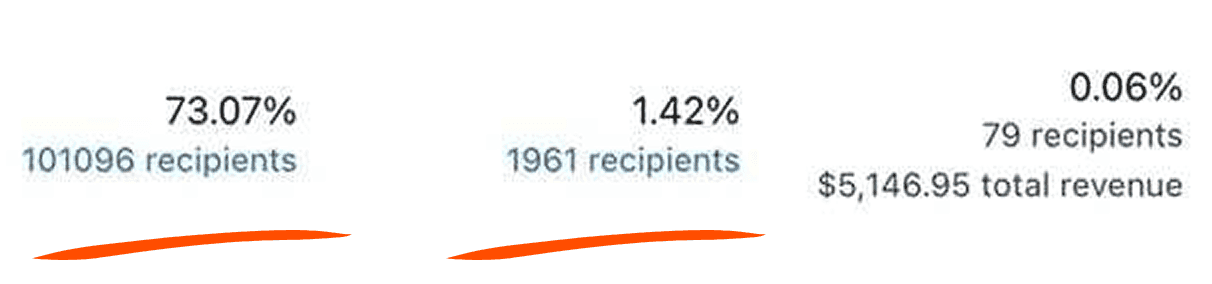
Campaign performance as it appears inside Klaviyo's own reporting.
Compare that to language like boosts deliverability with AI or improves your sender score automatically. Those phrases sound similar but describe completely different, much broader claims that may have nothing to do with which tab an email lands in.
A practical way to test before committing
Most tools in this space offer some kind of trial period. Use it properly. Set up a seed test across Gmail, Yahoo and Outlook before the trial starts, run your normal sending for the trial length, then check placement again at the end.
This tells you what actually happened, rather than relying on a dashboard metric the vendor controls how to display. Thirty days is enough to see a real shift if the tool is working on the layer it claims to.
Why one app rarely covers everything
Even a genuinely effective placement tool won't fix a reputation problem and a genuinely effective reputation tool won't fix a placement problem. What's the best Klaviyo app to land in the primary tab really depends on which of those two you're dealing with and sometimes the honest answer is both, run together.
Our take: most brands would save months of trial and error by answering that one mechanism question before subscribing to anything, instead of after three billing cycles of wondering why nothing changed.
Where MailMend sits in this comparison
MailMend is the answer to the placement question specifically. We work at the email header level, the signal that decides Primary versus Promotions, the layer that copy tools, list and segmentation tools, and reputation or warmup tools never touch. That is the entire point of the tool, and it is exactly the layer most apps in this category quietly skip while borrowing the placement label.
Installing MailMend means no content rebuild, no new sending strategy, and no change to your copy, design or list. It works across every Klaviyo campaign and flow once installed, goes live in about 15 minutes, and is built to influence the Primary versus Promotions decision rather than tidy up around the edges of it. Because the results show up in a native Klaviyo A/B test, MailMend on versus off, you don't have to take our word for where your emails land, you can watch it. If you're still asking what's the best Klaviyo app to land in the primary tab and your reputation is already solid, placement is the remaining variable, and it's the one MailMend is built for. It works alongside your list-hygiene and reputation efforts as the missing placement layer on top, not a lesser piece of the stack.
See where your Klaviyo emails actually land
If your sender reputation is solid and you're still stuck in Promotions, placement is the layer left to fix, and it's the one MailMend is built for. We work at the header level, across every Klaviyo campaign and flow, with no change to your copy, design or list, and you can watch the difference in a native Klaviyo A/B test. Book a demo or start your 30-day trial and see where your emails are really landing.
Frequently Asked Questions
What's the best Klaviyo app to land in the primary tab for a brand with a clean sender reputation?
Look for a tool that works at the header or technical signal level specifically, since reputation is already handled and placement is the remaining variable.
How do I know if an app's placement claims are legitimate?
Ask the vendor to explain their mechanism in specific, concrete terms. Vague language about AI optimization without a named process is a warning sign.
Should I trust case studies when picking a placement app?
Treat them as a starting point, not proof. Case studies rarely show which specific layer of the problem improved.
How long should a trial run before I judge whether a tool works?
About 30 days, paired with a seed test at the start and end, gives a reasonably clear picture without wasting months.
Can a placement tool replace a reputation or list hygiene tool?
No. They work on different layers. A brand with real reputation issues needs a reputation tool regardless of how good a placement tool is.