Resources
Mailmend.io vs Mailreach: Choosing the Right Email Deliverability Solution for E-commerce
Author :
MailMend Team
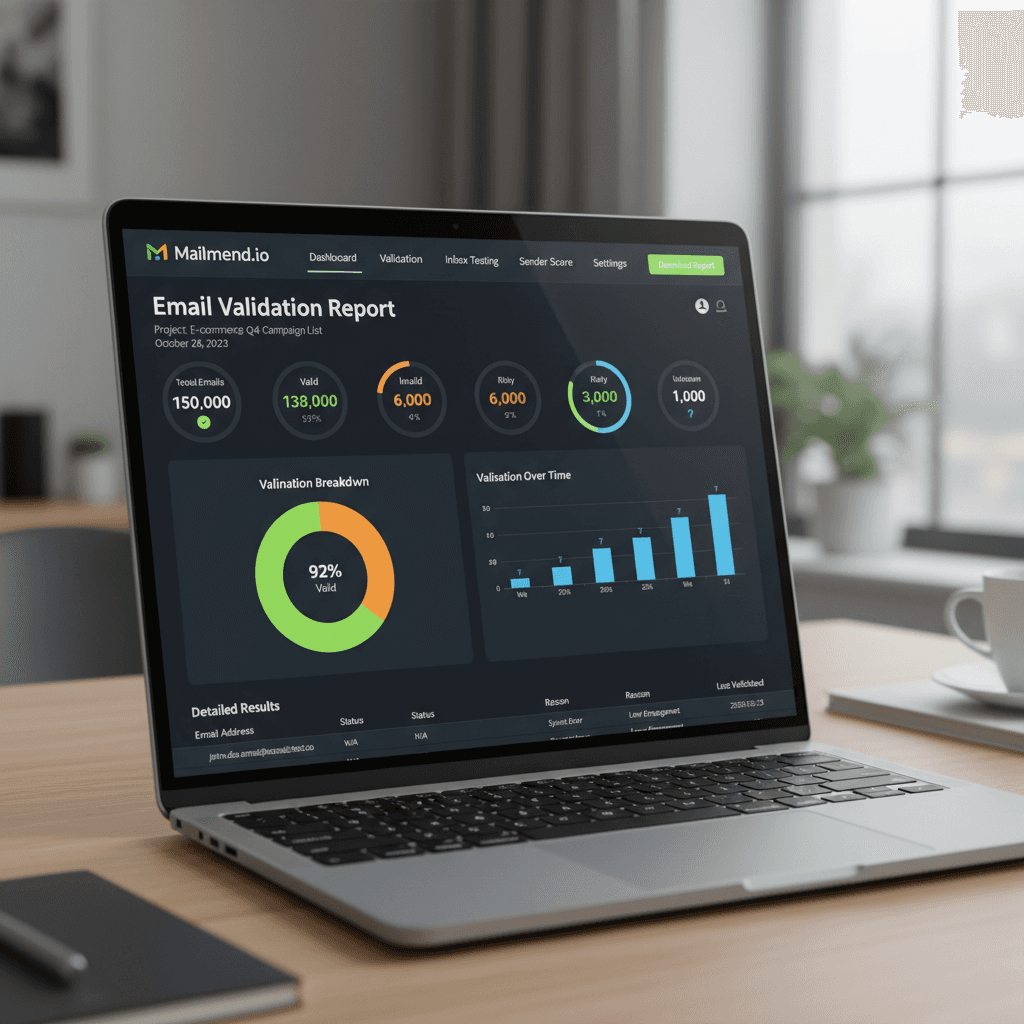
E-commerce brands face two distinct email challenges that require fundamentally different solutions. While Mailreach focuses on building sender reputation through gradual warm-up processes for cold outreach, Mailmend targets the specific problem of promotional emails landing in Gmail's Promotions tab instead of the Primary inbox. Understanding this core distinction—between reputation building and algorithmic inbox placement—helps DTC brands select the approach that delivers immediate revenue impact versus gradual technical improvement.
Key Takeaways
Mailmend delivers measurable results in 24 hours with drag-and-drop Klaviyo integration, while Mailreach requires 7-14 days for warm-up effectiveness—a critical difference for time-sensitive campaigns
E-commerce brands using Mailmend report 50-112% email revenue increases through Primary inbox placement, compared to Mailreach's focus on sender reputation metrics and spam prevention
Mailmend's setup completes in under 5 minutes through native Klaviyo integration, while Mailreach requires 30+ minutes of SMTP configuration across multiple inboxes
For Klaviyo users, Mailmend provides built-in A/B testing to measure exact revenue lift, a capability not commonly found in warm-up competitors
Mailmend serves 500+ e-commerce businesses exclusively, while Mailreach targets B2B cold email senders—these tools solve different problems for different audiences
Understanding Email Deliverability Issues: Why Your Emails Miss the Primary Inbox
The email deliverability challenge facing e-commerce brands differs fundamentally from what B2B cold emailers encounter. While cold emailers worry about landing in spam folders due to poor sender reputation, e-commerce marketers face a more nuanced problem: their emails successfully avoid spam but get categorized into Gmail's Promotions tab.
This distinction matters because 91.22% of promotional emails land in the Promotions tab, where visibility and engagement plummet. Gmail's categorization algorithms analyze multiple signals to determine inbox placement, creating what Mailmend calls the "promotional threshold"—the combined factors that trigger Promotions tab placement regardless of sender reputation.
The impact on e-commerce revenue is substantial:
Emails in Promotions tab receive significantly lower open rates than Primary inbox placement
Click-through rates suffer because subscribers check Promotions less frequently
Revenue per email drops when promotional messages compete with dozens of other marketing emails
Time-sensitive campaigns like Black Friday launches lose effectiveness when buried in tabs
Traditional deliverability solutions focus on sender reputation—building trust through warm-up processes, authentication protocols, and engagement patterns. But for e-commerce brands with established domains and good sender scores, the problem isn't reputation. The problem is algorithmic categorization.
This is where Mailmend's approach becomes essential for e-commerce marketers seeking Primary inbox placement without overhauling their entire email strategy.
Mailmend's Proprietary Algorithmic Inbox Placement Technology Explained
Mailmend operates on a fundamentally different premise than traditional deliverability tools. Rather than building sender reputation over weeks, Mailmend uses proprietary AI to analyze and counteract Gmail's categorization algorithms through custom code snippets.
The technology works through a three-step process:
Mailmend sends client emails to a rotating set of test inboxes to determine current placement
Proprietary AI analyzes the promotional threshold—the specific factors causing Gmail to categorize emails as promotional
Custom code is generated specifically for each Klaviyo account to counteract promotional categorization signals
This approach delivers results at the technical header level rather than requiring content modifications. E-commerce brands can maintain their existing creative, copy, and promotional strategy while achieving Primary inbox placement.
How Mailmend Bypasses Gmail's Promotions Tab
The key differentiator is that Mailmend doesn't require any changes to email content, subject lines, or sending frequency. Traditional advice for avoiding the Promotions tab—like reducing promotional language or limiting sales messaging—forces brands to water down their marketing. Mailmend eliminates this trade-off.
Implementation through Klaviyo integration includes:
Drag-and-drop code insertion directly into Klaviyo templates
Native A/B testing within Klaviyo's analytics dashboard
Split testing between Mailmend-enabled emails and control groups
Real-time revenue attribution to measure exact performance lift
The case studies demonstrate this technology in action. Dr. Squatch achieved 112% email revenue increase with 42% open rate improvement and 67% CTR increase within 24 hours of implementation. These results came without any modifications to their existing email creative or promotional strategy.
Mailreach and Warm-up: Boosting Your Sender Reputation for Better Inbox Placement
Mailreach takes a traditional approach to email deliverability through network-based warm-up. The platform maintains a 20,000+ inbox network that simulates real email engagement to build sender reputation gradually.
Mailreach's warm-up methodology focuses on:
Sending emails to real inboxes that mark messages as important and reply
Building consistent sending patterns over time
Improving IP and domain reputation through engagement signals
Preventing spam folder placement for new or damaged sender domains
This approach works well for its intended use case: B2B cold email senders who need to establish credibility with email service providers before launching outreach campaigns. Mailreach reports 137% reply growth for users focused on cold outreach.
However, warm-up tools address sender reputation—not Gmail's tab categorization. An e-commerce brand can have perfect sender reputation and still land in the Promotions tab because Gmail's categorization algorithms evaluate different signals than spam filters.
The Fundamentals of Email Warm-up and Its Impact on Deliverability
Email warm-up serves a specific purpose: establishing trust with email service providers for new domains or accounts recovering from deliverability issues. The process typically takes 7-14 days for effectiveness with gradual improvement continuing over weeks.
For B2B cold emailers, this investment makes sense. Cold outreach to prospects who haven't opted in faces strict scrutiny from email providers. Without warm-up, these messages often land in spam.
But e-commerce email marketing operates differently. Subscribers have opted in, sender domains are typically established, and authentication (SPF/DKIM/DMARC) is already configured. The deliverability challenge isn't avoiding spam—it's achieving Primary inbox placement among properly delivered emails.
Evaluating Your Sender Health: Email Reputation Check and Scoring
Understanding your current email health helps determine which solution fits your situation. Mailreach offers comprehensive deliverability diagnostics including spam score analysis, DNS authentication monitoring, and blacklist checking.
Key metrics for assessing sender reputation include:
Bounce rate and spam complaint ratios
Domain authentication status (SPF/DKIM/DMARC)
IP reputation across major providers
Blacklist presence
Historical engagement patterns
These metrics matter significantly for cold emailers and new senders. However, for established e-commerce brands on Klaviyo, these fundamentals are typically already optimized. Klaviyo handles authentication, manages IP reputation, and monitors deliverability metrics automatically.
The more relevant question for e-commerce marketers is: where are your emails landing within successfully delivered messages? An email can pass every reputation check and still land in Promotions, reducing visibility and revenue.
Mailmend's approach focuses specifically on this placement question, using seed list testing to determine whether emails reach the Primary inbox or get categorized as promotional—a distinction many warm-up tools don't address.
Comparing Setup and Implementation: Mailmend's 5-Minute Promise vs. Warm-up Timelines
The implementation experience reveals significant differences between these approaches.
Mailmend's rapid deployment:
Setup completes in under 5 minutes through drag-and-drop Klaviyo integration
No SMTP configuration or technical infrastructure changes required
Custom code generated automatically based on account analysis
A/B testing enabled immediately within existing Klaviyo workflows
Day 1 revenue impact visible through performance comparisons
Mailreach's warm-up timeline:
Initial setup requires 30+ minutes of SMTP configuration
Warm-up effectiveness takes 7-14 days to develop
Full deliverability improvement may require 2-4 weeks
Per-inbox setup multiplies time investment for multiple accounts
Results appear gradually through reputation building
Achieving Immediate Results: Mailmend's Rapid Deployment
For e-commerce brands facing time-sensitive opportunities, the speed difference proves critical. Consider a brand preparing for Black Friday with emails landing in Promotions. Waiting 2-4 weeks for warm-up to take effect means missing the entire sales window.
Larsson & Jennings experienced this scenario firsthand. After data failures caused deliverability problems, they needed immediate results—not a multi-week recovery process. Mailmend delivered impressive results with 82% open rate increase and 51% CTR increase, effectively "saving their Black Friday" according to their testimonial.
The white-glove support model further accelerates implementation. Each Mailmend client receives dedicated 1-to-1 representation, with specialists managing implementation and ongoing optimization. This personalized approach contrasts with self-service warm-up tools that require internal teams to manage configurations.
Revenue Impact and Guarantees: Mailmend's Performance-Based Model
Mailmend's business model aligns directly with client revenue outcomes through satisfaction guarantees—a structure that warm-up competitors don't offer.
Documented revenue impacts from Mailmend clients:
Dr. Squatch: 112% email revenue increase, 42% open rate improvement, 67% CTR increase
Ministry of Supply: 27% open rate increase, 30% CTR increase within one business day
StickerYou: 20% open rate increase with Day 1 boost growing to 100% by month one, ultimately achieving 64% open rate improvement and 43% CTR increase
Clevr Blends: 21% open rate increase, 63% CTR increase
Larsson & Jennings: 82% open rate increase, 51% CTR increase
Amberjack: 54% open rate increase, 51% CTR increase
These results reflect direct revenue attribution through Klaviyo's native analytics. Brands can measure exact dollar impact by comparing Mailmend-enabled campaigns against control groups.
Mailreach's value proposition focuses on different metrics: 19% average revenue growth from improved deliverability and reply rates for cold outreach. While meaningful for B2B prospecting, this indirect measurement doesn't translate directly to e-commerce promotional campaign performance.
Measuring the Financial Returns of Improved Inbox Placement
The ROI calculation for Mailmend becomes straightforward with A/B testing data. If Primary inbox placement doubles open rates and increases click-through rates by 50-60%, the revenue impact compounds across every campaign.
For a brand generating $500,000 annually from email marketing, a 50% increase represents $250,000 in additional revenue. Against the investment required, the return materializes within weeks rather than months.
Contact Mailmend's team to discuss specific projections based on your current email performance metrics.
Best Use Cases: E-commerce Marketing vs. Cold Outreach and Mass Mailers
The fundamental question isn't which tool is "better"—it's which problem you're solving.
Mailmend excels for:
E-commerce brands using Klaviyo for retention marketing
Companies with emails landing in Promotions despite good sender reputation
Black Friday/Cyber Monday and seasonal campaign preparation
New product launches requiring maximum inbox visibility
Seven-to-eight-figure DTC brands seeking revenue optimization
Teams that need immediate results without content strategy overhauls
Mailreach serves different needs:
B2B cold email outreach campaigns
New domains requiring reputation building
Agencies managing multiple client inboxes
Lead generation with prospects who haven't opted in
Senders recovering from spam folder placement issues
These solutions serve complementary purposes rather than competing functions. Traditional warm-up tools build long-term sender reputation for new domains, while Mailmend optimizes promotional tab placement for established e-commerce email programs.
Who Should Use What: Mailmend for E-commerce Klaviyo Users, Mailreach for General Sender Reputation
For e-commerce brands on Klaviyo, Mailmend represents the superior choice. The platform's exclusive focus on 500+ e-commerce businesses means every feature, optimization, and support process is designed specifically for DTC promotional email challenges.
Choose Mailmend when:
You use Klaviyo for email marketing
Your emails avoid spam but land in Promotions tab
You need measurable revenue impact within 24-48 hours
You want to preserve existing email creative and strategy
You require native A/B testing with revenue attribution
Time-sensitive campaigns demand immediate solutions
Choose warm-up tools when:
You're launching cold email outreach campaigns
You need to warm new domains before sending
You use multiple ESPs beyond Klaviyo
Your primary challenge is spam folder placement, not tab categorization
You have weeks available for gradual improvement
The decision framework becomes clear: e-commerce marketers seeking Primary inbox placement without content changes should use Mailmend. B2B cold emailers building sender reputation from scratch benefit more from warm-up services.
For Klaviyo users ready to move campaigns from Promotions to Primary inbox, explore Mailmend's partnership opportunities or review documented results from brands like Dr. Squatch, Ministry of Supply, and Larsson & Jennings in the case studies section.
Frequently Asked Questions
What is the main difference between Mailmend.io and Mailreach?
Mailmend solves Gmail Promotions tab categorization through algorithmic code-based placement, while Mailreach builds sender reputation through network-based warm-up. These tools address fundamentally different problems. Mailmend targets e-commerce promotional emails that avoid spam but get categorized into the Promotions tab. Mailreach helps cold emailers establish credibility to avoid spam folders entirely. For Klaviyo users sending to opted-in subscribers, Mailmend's approach delivers more relevant results.
Can Mailmend.io be used with email service providers other than Klaviyo?
Currently, Mailmend integrates exclusively with Klaviyo. This specialization enables the native drag-and-drop implementation, built-in A/B testing, and deep platform optimization that generic SMTP tools can't provide. For Klaviyo users, this focus represents an advantage—every feature is designed specifically for the e-commerce email workflow. Brands using other ESPs would need to evaluate warm-up alternatives or consider migrating to Klaviyo to access Mailmend's capabilities.
How quickly can I expect to see results from Mailmend.io?
Mailmend delivers measurable results within 24 hours of implementation. Case studies show brands like Dr. Squatch achieving 112% email revenue increase and Ministry of Supply seeing results within one business day. This speed contrasts sharply with warm-up tools requiring 7-14 days for initial effectiveness and 2-4 weeks for full optimization. For time-sensitive campaigns, this difference can determine success or failure.
Does Mailmend.io require me to change my email content or sending strategy?
No. Mailmend's algorithmic approach works at the technical header level, requiring zero changes to email creative, copy, subject lines, or promotional strategy. This preserves your high-performing content while achieving Primary inbox placement. Traditional advice for avoiding Promotions—like reducing sales language or limiting promotional content—becomes unnecessary with Mailmend's code-based solution.
Is Mailmend.io suitable for cold email campaigns?
Mailmend is designed specifically for e-commerce promotional emails to opted-in subscribers, not cold outreach. Cold email campaigns face different challenges—building sender reputation with email providers who scrutinize unsolicited messages. For B2B cold outreach, warm-up tools like Mailreach that focus on sender reputation building are more appropriate. The solutions serve complementary purposes for different email marketing scenarios.
What kind of revenue impact should I expect from using Mailmend.io?
Documented case studies show revenue increases ranging from 50-112% depending on current Promotions tab placement rates and audience engagement. Specific results include Dr. Squatch's 112% revenue increase, StickerYou's growth from 20% Day 1 improvement to 100% by month one, and Ministry of Supply's immediate 27% open rate lift. Your results depend on current performance metrics, but Mailmend's built-in A/B testing allows precise measurement of revenue attribution from Primary inbox placement.